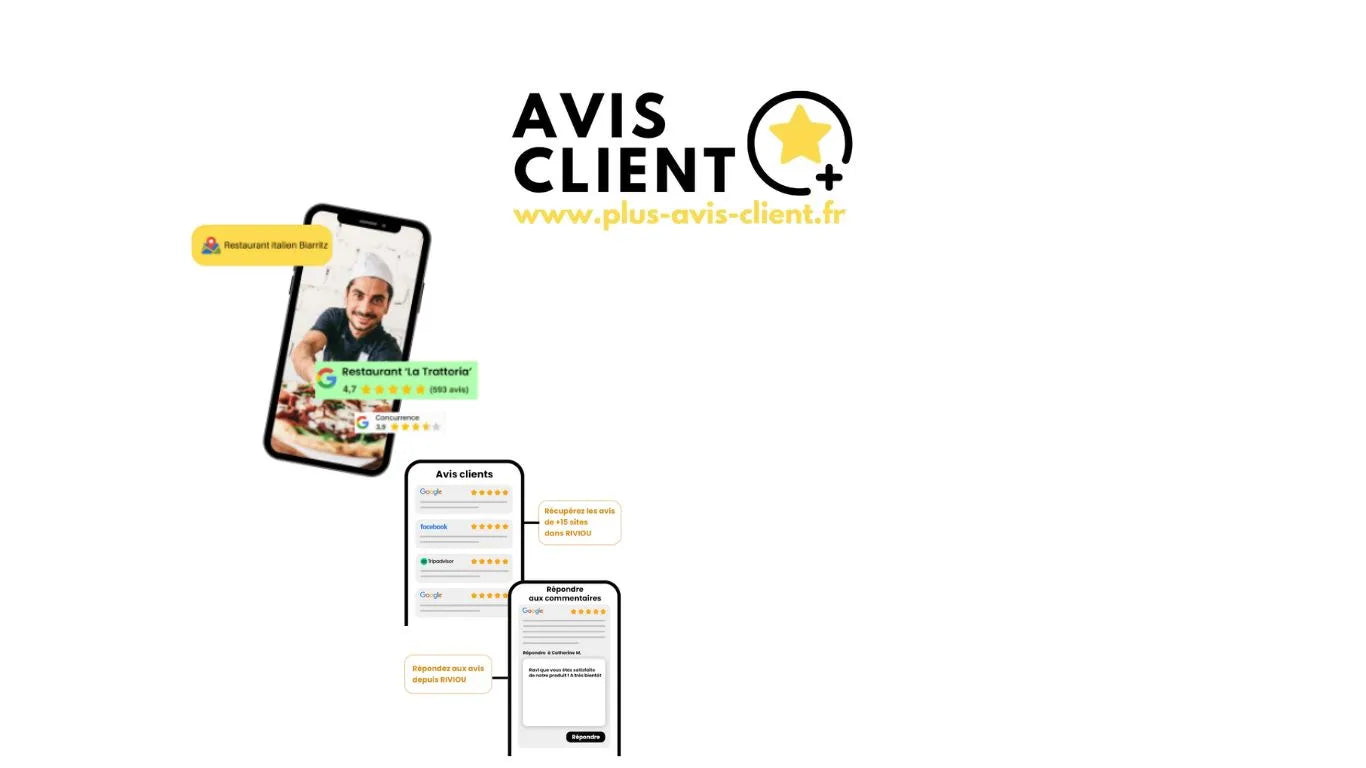

Digital Journey of the Modern Enterprise
Introduction to the digital transformation of businesses
In recent years, digitalization has become essential for businesses . The digital world has radically changed the way small and medium-sized enterprises (SMEs) interact with their customers and manage their online reputation . Today, a strong online presence has a direct impact on business success.

New customer interactions
With the emergence of digital platforms, the relationship between businesses and customers has evolved. Direct and instant communication via social media and online reviews is now the norm. This shift has made businesses more accessible and connected to their customers.
Online reviews play a crucial role in this digital dynamic. Customers often rely on testimonials and experiences shared by others to make purchasing decisions. Thus, a company's online reputation can significantly influence its success.
Platforms such as Google, Facebook, and Tripadvisor have become essential tools for consumers, providing valuable information before any engagement. Effectively managing these reviews can lead to significant increases in customers and revenue.
Additionally, these constant interactions and customer feedback management allow companies to quickly adapt to market needs. They can thus develop strategies that are more aligned with their customers' expectations.
The importance of a good e-reputation
A good online reputation can be a major competitive advantage. It improves a company's visibility and inspires consumer confidence. This trust often translates into increased loyalty and referrals to potential new customers.
Specialized tools now make it easier to monitor and improve this online reputation. By using these platforms, businesses can ensure positive and proactive customer feedback.
Maintaining an active presence to respond to reviews, whether positive or negative, is crucial. An appropriate response can turn an unsatisfying customer experience into an opportunity for improvement and demonstrate a sincere commitment to customer satisfaction.
Therefore, businesses that understand the strategic importance of e-reputation can use this tool to reach new heights in customer retention and acquisition.
Examples of success in e-reputation
Many SMEs have successfully transformed their trajectory thanks to exemplary online reputation management. By using platforms like Plus-avis-client.fr, they have made it easier to collect and manage reviews across various digital channels.
Case studies show that paying close attention to reviews can improve overall customer satisfaction and brand image. For example, a local restaurant, after adopting a proactive online reputation strategy, saw its bookings increase by 30% in just a few months.
Similarly, an online store increased sales by improving its response rate to customer comments and reviews, demonstrating its responsiveness and commitment to providing exceptional service.
The advantages of a controlled e-reputation
Managing your online reputation offers undeniable benefits for any business. This translates into significant revenue growth and an expanded customer base. Effective online review management can transform a company's bottom line.
Increased visibility
Proactively managing customer reviews increases online visibility. Consumers rely on positive reviews to choose between various products and services. Therefore, an abundance of authentic and positive reviews can position a business at the top of local searches.
Search engine algorithms, such as those used by Google, favor businesses with a well-established online reputation. This increased visibility often translates into an increase in new customers.
SMEs particularly benefit from this, strengthening their position in competitive markets. They are able to stand out and attract a wider customer base thanks to this positive feedback.
A strong digital presence not only ensures increased recognition but also encourages potential customers to trust and prioritize the offerings of these companies.
Building customer confidence
Customer trust stems directly from feedback shared across various digital channels. Well-organized customer feedback management builds trust between consumers and the brand.
Positive feedback signals the quality and reliability of a business offering and allows customers to make confident decisions. Direct testimonials provide reassurance that their needs are guaranteed to be met.
Demonstrating listening and responding to criticism demonstrates a company's commitment to continuous improvement, thereby strengthening that relationship of trust.
Investing in a specialized platform like plus-avis-client.fr helps track all reviews and ensure every customer interaction remains positive.
Help in optimizing growth strategies
Optimizing customer review management has a direct impact on growth strategies. It allows businesses to better understand their strengths and weaknesses and adjust their marketing efforts.
A detailed analysis of customer feedback highlights areas for improvement to further optimize offers and services.
Customer feedback helps identify preferences, thus adjusting the products and services offered according to market trends and desires.
A feedback-centric strategy ensures brand alignment with customer expectations, generating a virtuous cycle of positive ROI.
Practical strategies for a better online reputation
SMEs and local businesses must incorporate effective digital strategies to continuously improve their online reputation . Here are some practical steps that boost positive feedback while minimizing negative reviews.
Encourage positive feedback
It's crucial to actively encourage satisfied customers to leave positive reviews . Creating an environment conducive to sharing positive experiences encourages more positive interactions.
Offering loyalty programs or incentives can encourage customers to share their opinions. Offering rewards for constructive feedback encourages honest and regular communication.
Multiplying feedback channels allows you to reach a wide audience and further consolidate the company's online presence.
Managing this positive feedback well can generate active and lasting exchanges with customers.
Manage criticism proactively
Reviews are part of the customer experience, but it's essential to turn them into opportunities. Responding quickly and positively to a review demonstrates real engagement.
Analyzing each comment to identify a recurring pattern can help address underlying issues. These adjustments boost overall satisfaction.
Paying genuine attention to customer reviews, even negative ones, can turn the tables in a company's favor.
Relevant advice from these experiences contributes to future improvements.
Integrate effective digital tools
Specialized software helps every business organize and efficiently manage its digital reputation. Tools such as plus-avis-client.fr provide automation and structured feedback management.
They centralize all reviews, allowing for more in-depth analysis with minimal risk of errors or unaddressed comments.
Intelligent algorithms provide deep insight and help identify potential trends or issues before they affect public image.
By adapting this collected data, SMEs adjust their strategies, thus securing a favorable reputation over the long term.
Understanding the diversity of review platforms
When monitoring e-reputation , it is crucial to master the diversity of multiple review platforms such as Google, Facebook, and Airbnb. A comprehensive strategy relies on integrating these various customer interaction channels.
The particularities of each platform
Each platform has its own specificities and requires special attention. For example, Google promotes local visibility through its reviews, while social media allows for more direct interaction with customers.
- Google : Powerful tool for local visibility and positioning in online searches.
- Facebook : Social platform enabling direct exchanges and interactive promotions.
- Tripadvisor : Essential for hotel and restaurant reviews.
- Booking : A key tool in the face of criticism in tourist accommodation.
Businesses must tailor their responses to the specifics of each platform to maximize results.
Analyzing feedback from these platforms helps personalize future interactions, strengthening engagement and making every customer contact an opportunity for improvement.
Effective and proactive monitoring
Carefully monitoring all review channels allows businesses to maintain a consistently positive image. This includes responding to every piece of feedback, demonstrating the importance placed on customers.
Specialized tools facilitate this constant monitoring, alerting companies of any new comments or criticisms.
Setting up alerts to effectively manage these comments in real time sends a strong signal of professionalism and customer empathy.
The impact of digital transformation on commerce
Digital transformation has disrupted traditional business methods, influencing customer-company relationships as well as overall business strategy . Digitalization continues to redefine the way we do business.
Evolution of customer-business relationships
Digital channels have transformed customer engagement, enabling more personalized and enriching interactions. Customer engagement now plays a central role, shaping every business strategy.
Digital solutions like CRM allow for leveraging customer data to optimize every interaction. These close relationships turn into loyalty, increasing repeat transactions.
- Instant Services : Provide immediate answers to customer issues through online platforms.
- Increased Personalization : Adjust offers based on customer preferences and behaviors detected through intelligent data collection.
- Always-on availability : Enable accessibility regardless of time or location.
- Social Engagement : Strengthening the brand community through influence and sharing on digital networks.
In this digital transformation, SMEs are integrating and adapting these elements to remain relevant in today's market.
New business paradigms
Looking to the future means expecting constant technological innovation and adapting quickly. Advances such as artificial intelligence and big data will continue to transform business interactions.
Anticipating these transformations allows you to identify new opportunities and remain competitive. Visionary companies are enriching their processes with these technologies, ensuring their business sustainability.
However, adaptation must be measured and adjusted to the specific needs of each company to avoid unproductive investments.
Above all, SMEs must maintain an openness to change, by gradually integrating these technological innovations.
Towards sustainable growth through digital technology
In a world undergoing rapid digital transformation, SMEs see the opportunity to reinvent themselves for sustainable growth by leveraging the right digital tools . Adopting these technologies guarantees solid and sustainable development.
Benefits of the right tools
SMEs have a multitude of digital tools at their disposal that can transform every aspect of their business. Innovative and specific solutions help optimize every process, from management systems to customer relations.
- Powerful CRM : Manage and leverage customer data to strengthen engagement and improve service.
- Process Automation : Simplify administrative and logistical operations, freeing up resources for core business.
- Communication platforms : Improve exchange and transparency between all stakeholders.
- Data Analysis : Use insights to make informed decisions, adjusting strategies based on empirical results.
Each company must identify the tools best suited to its needs and its market to maximize profits.
Investing in this type of technology encourages successful integration that transcends every aspect, from product design to after-sales service.
Sustainable adaptation strategies
To ensure their future, SMEs must regularly revisit and readjust their strategies so as never to lose their competitiveness.
It is essential to foster a culture of continuous innovation, where every employee plays an active role in integrating and suggesting improvements based on their practical experience.
Continuous training and technology adoption programs provide employees with skills and openness that ensure a flexible strategy adapted to all hierarchical levels.
Importance of strategic partnership
To effectively navigate this digital landscape, SMEs can collaborate with experts like plus-avis-client.fr, providing specialized support in e-reputation management as well as technical expertise applicable at scale.
These partnerships facilitate the adoption of digital tools and minimize the risk of errors in the digitalization process. They also enable a synergy of skills within the company.
By practicing this combination of expertise and digital tools, SMEs benefit from exponential prospects in their market and considerably strengthen each objective set.